Field Notes
When to Photograph Vietnam, City by City

Monsoon rain on a Saigon street. Photo: Alexandre Garel (@saigonsnaps)
The morning light in Hanoi's Old Quarter on a clear October day hits Hàng Bè Street at an angle that only lasts about twenty minutes — low enough to catch the smoke from breakfast stalls without washing out the shadows in the alleyways behind them. That twenty-minute window doesn't exist in January, when the mưa phùn winter drizzle flattens everything to grey, or in July, when the monsoon heat compresses the air and the light comes hard and overhead. Vietnam shoots in seasons, and knowing which season belongs to which city changes what you find in your frame.
Vietnam's Light Doesn't Follow One Calendar
The geography of Vietnam makes a single answer impossible. The country spans 1,650 kilometers north to south across two climate zones. The north has four genuine seasons — winter fog, spring warmth, summer storms, autumn clarity. The south runs a strict wet-dry binary. The central coast plays both depending on which monsoon is blowing. Every season produces shootable conditions. Some are just more particular than others.
What changes between seasons isn't just weather — it's the quality of light, the subjects available, the mood of the streets. Hanoi in October shoots differently from Hanoi in February. Same lens, same neighborhood, opposite results. Learning to read Vietnam's seasons as a photographer rather than a tourist is worth more than any fixed itinerary.
Rain doesn't ruin street photography in Vietnam — it changes what's available. Umbrellas become graphic elements. Puddles become mirrors. The covered arcades of Hội An fill with people sheltering, waiting, watching.
Northern Vietnam: Four Seasons, Four Modes
Hanoi — September–November and April–June
Hanoi's two best windows for street work are well-established among photographers who've shot the city more than once. September through November brings temperatures around 25°C with low humidity and clear skies — the Old Quarter's narrow lanes fill with morning light that slants through the buildings and catches the smoke from bánh mì carts and incense vendors at street-level shrines. Blue hour at Hoan Kiem Lake stretches long and generous, and the crowds thin enough that you can find stillness inside all that city noise.
April through June is warmer — occasionally pushing past 30°C — but the skies stay clean before the summer monsoon arrives. This window rewards early risers. By 6am on Hàng Bè or Hàng Gai, the light is already doing something worth photographing. The complete guide to shooting in Hanoi breaks down neighborhood timing in detail, but if you're planning around seasons, these two windows are where the city is at its most photogenic.
December through March is cold — lows around 10°C in January — and the mưa phùn winter drizzle creates a persistent mist that can either make your frames feel atmospheric or make you pack up by noon. For architectural work in the Old Quarter's alleyways, the diffuse winter light eliminates harsh shadows and gives the lane shots a monochrome quietness. For portrait work on the street, the grey sky is harder to work with. It depends entirely on what you're after.
Halong Bay — April–June or September–November
Halong Bay gets discussed so often in tourist terms that it's easy to overlook what it offers photographically: dramatic vertical geology, reflective water, and a quality of morning mist that can transform a frame from postcard to something strange. Winter mist (December–March) is heavier and less predictable — cruise cancellations happen, and the karsts can disappear entirely into cloud. But photographers willing to work in those conditions sometimes come back with images of limestone towers emerging from fog that April visitors never see.
For more reliable shooting, April to June and September to November offer clearer skies and calmer water. Golden hour from a kayak at 5:30am, with the bay to yourself before the tour boats wake up, is worth the early alarm and the slightly warmer months.
Sapa — September and October Are the Window
If you're shooting in the northern mountains, the rice harvest in September and October is the most concentrated period of visual intensity on Vietnam's agricultural calendar. The terraced fields above Mù Cang Chải and around Sapa turn from green to layered gold, and Hmong and Dao vendors at the Saturday Bắc Hà market arrive in indigo cloth and embroidered silver that photographs with weight and specificity. Ask before shooting close portraits — a gesture and a smile usually does it — and plan to stay for the full market rather than rushing through. The most interesting frames happen after 9am, when the trading gets serious and the vendors stop performing for cameras.
This two-month window draws photographers who know the calendar — book accommodation early, shoot the markets on weekday mornings rather than weekend middays, and get up before dawn to catch the terraces in low cloud before the light goes flat.
Central Vietnam: The Coast That Switches Sides
Hội An — February to April
Hội An's dry season (roughly February to April) is the window most photographers aim for, and with reason. The old town's yellowed walls catch golden hour light around 5:30–6pm that turns everything warm and saturated. The Thu Bon River reflects lanterns without competing against rain and grey skies. February also brings the lead-up to Tết, when the town fills with marigold and kumquat arrangements and the streets get dense with family movement that rewards patient, quiet street work.
What most photographers miss: the covered arcades along the old town's main strip work better in light rain. Overcast sky becomes a natural softbox, lantern colors and shopfront tones saturate rather than blow out, and people sheltering in the arcades create an intimacy and stillness that the peak-season crowds don't allow. The covered arcade light in February drizzle is worth more than clear-sky noon in high season.
Huế — November to March
Huế sits on the wrong side of the mountains during the autumn monsoon — September and October can bring flooding and grey weeks. But from November through March, the city clears and cools into ideal shooting conditions. The Imperial Citadel at dawn in December has an emptiness and quality of low-angle light that compensates for needing a jacket. The Perfume River in this season runs lower and reflects the sky cleanly. Huế rewards photographers who go slightly off-season and against the grain of the tourist calendar.
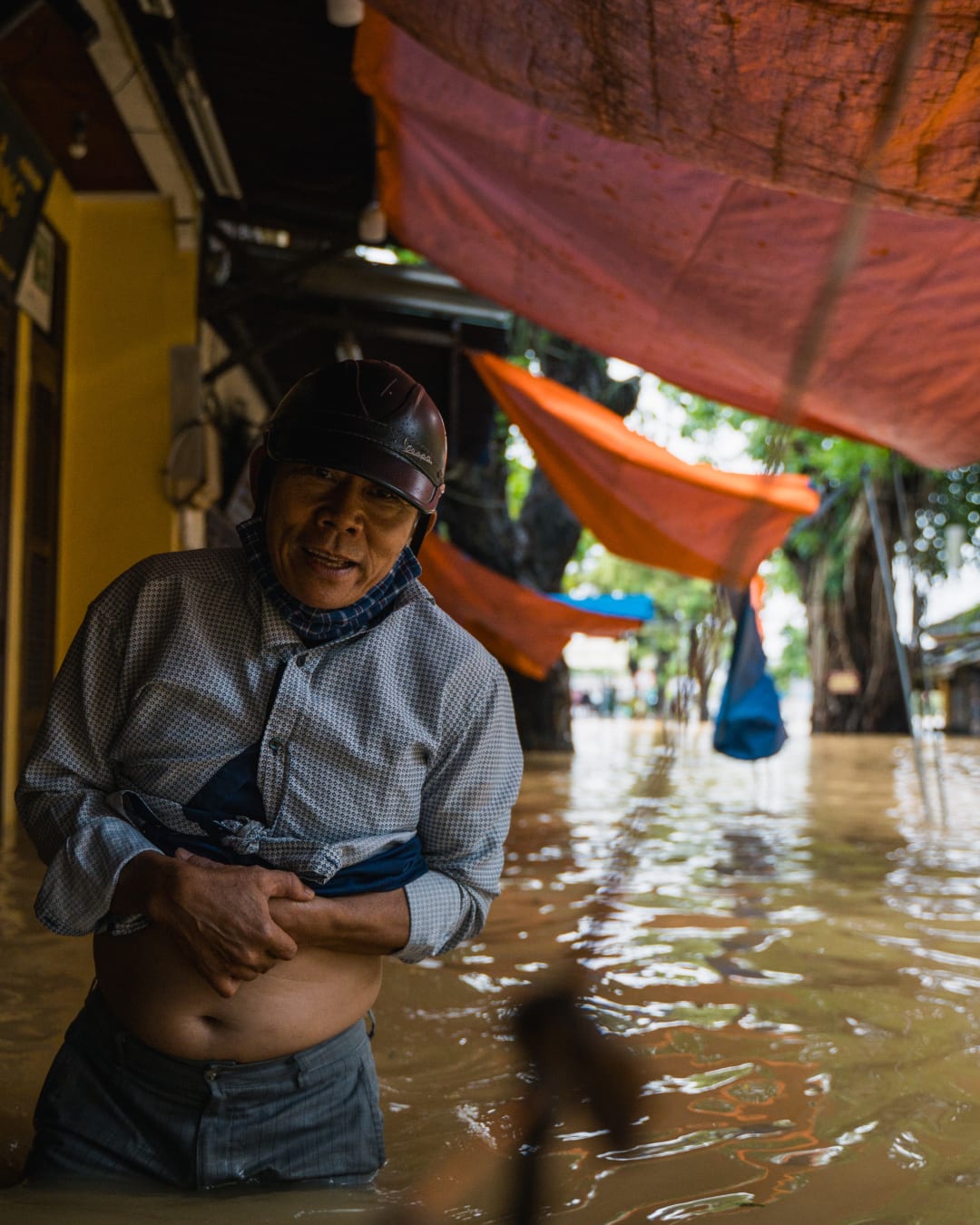

Central Vietnam’s flood season closes streets and opens photographs — Hội An, late autumn. Photos: Pete Walls (@pjwphoto)
The South: Year-Round With a Seasonal Mood
Ho Chi Minh City — Dry Season for Volume, Wet Season for Drama
Saigon operates differently from the north. The dry season (November through April) is when the city is at maximum density and pace — markets overflow, street food carts multiply, and the light in District 1 at golden hour bounces off glass and chrome in ways that reward fast, reactive shooting. If you want the city at its most kinetic, the dry season is it. The complete guide to shooting Saigon covers the districts and timing in depth.
The wet season (May through October) brings afternoon thunderstorms that typically arrive around 3pm and clear within an hour. What follows is some of the most interesting shooting of the year: steam rising from asphalt, puddles turning intersections into mirrors, vendors covering their carts with blue tarpaulins that pop against grey sky. Wet season Saigon is less comfortable but visually richer for photographers who don't mind getting damp and staying out longer than feels sensible.
Golden hour timing in Vietnam shifts significantly with the season — summer sunrise arrives by 5:30am and you have roughly 25–30 minutes of workable directional light before it goes harsh. In winter, the window stretches later but the angle is lower and cooler. Check the actual sunrise time for your travel dates, not a generic estimate. Set an alarm, not an expectation.
Da Lat — The Counterintuitive Choice
Da Lat sits at 1,500 meters and runs 10–15°C cooler than the coast year-round — Vietnam's highland anomaly. The rainy season (June through November) brings morning mist that settles over the valley and pine forests, and the flower markets near Xuan Huong Lake operate in fog that turns the whole scene impressionistic. The photographers who know Da Lat go in the wet months precisely because the conditions force a different kind of frame — slower, quieter, more atmospheric than the crisp dry-season light allows. In November mist, it's something else entirely.

The southern wet season delivers its rain on schedule — plan around the 4pm downpour, then shoot it. Photo: Alexandre Garel (@saigonsnaps)
Planning a Multi-City Itinerary
If you want one weather window to thread through the whole country, March through April is the closest to universally workable. Hanoi is warming up from winter, Hội An is in peak dry season, and Saigon is in late dry. You can move north to south and hit each city in its sweet spot — roughly two to three weeks, each city giving you something distinct.
The Field Notes archive has city-by-city guides that get into what conditions actually look like, beyond the climate charts. Photographers submit work here from across the country and in every season. And if you're building a year-round practice or planning your first serious trip, the Streets & Stories newsletter runs one photographer at a time, in depth.
- Check each city's micro-season individually — what's true in Hanoi in November is not true in Hội An that same month
- Pack for humidity regardless of season; fungal growth on optics is a real concern in the wet months — carry silica gel and a lens cloth
- In northern Vietnam winter, carry a warm layer; temperature swings between heated indoor markets and outdoor streets are significant and your hands will matter
- Wet season: treat rain as an asset rather than an obstacle — bring a bag cover and stay out longer than feels comfortable
- Check actual sunrise and sunset times for your specific travel dates — golden hour timing shifts 45+ minutes between summer and winter across Vietnam
Vietnam Streets is a curated community documenting Vietnamese street life. Submit your work — selected photographs join the 840+ already published here from 170+ photographers.
Submit Your Work →Frequently asked questions
When is the best time to photograph Hanoi?
Hanoi's two strongest windows for street work are September through November and April through June — clear skies and workable morning light before the summer monsoon. Hanoi in October shoots differently from Hanoi in February, so the season matters as much as the city.
Is there one best season to photograph all of Vietnam?
No. The country spans 1,650 kilometers across two climate zones, so there's no single answer — the north runs four genuine seasons, the south a strict wet-dry binary, and the central coast switches depending on which monsoon is blowing.
Can you shoot street photography in the rainy season?
Yes. Rain doesn't ruin street photography in Vietnam, it changes what's available — umbrellas become graphic elements, puddles become mirrors, and the covered arcades fill with people sheltering. Every season produces shootable conditions; some are just more particular than others.

One photographer an issue. Free, and no spam.
No spam. Unsubscribe at any time.